Breakthroughs Across Science: From Aging Biology to Deep-Sea Discoveries
Tri-Perspective Lens
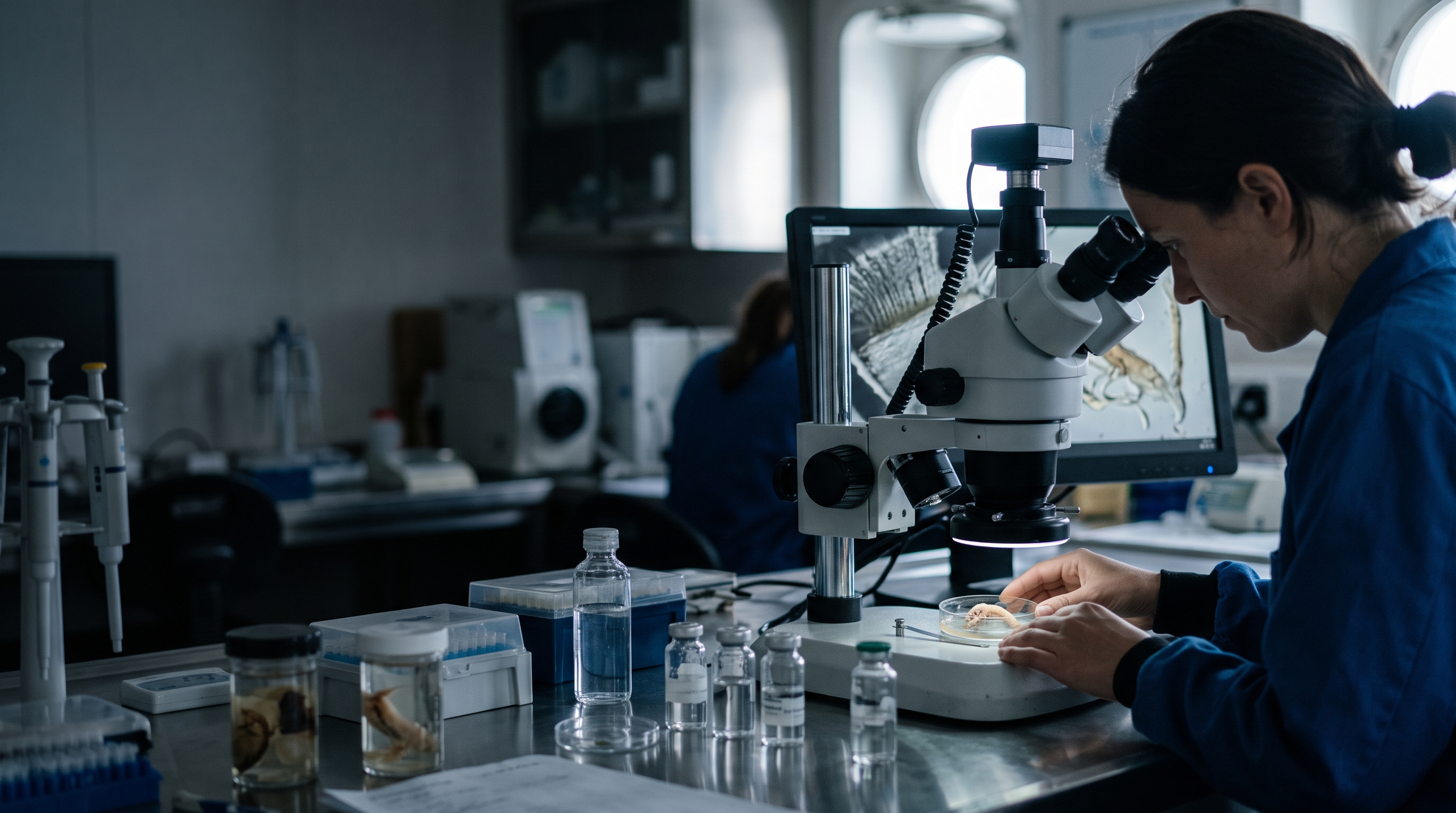
Recent scientific endeavors have unveiled significant advancements across diverse fields. Researchers have identified a biological mechanism linking specialized stem cells to age-related belly fat, offering new avenues for anti-obesity treatments. Concurrently, a novel "megacluster" of antibiotics has been discovered, providing a promising strategy against superbugs. In marine biology, an expedition off Brazil, aided by cutting-edge technology, rapidly uncovered 31 new species, expanding our understanding of ocean biodiversity. These findings collectively highlight ongoing progress in biological and medical research and exploration.
Institutional
Neutral Synthesis
Official scientific reports and research institutions have announced several significant discoveries. These include the identification of specialized stem cells that may trigger age-related belly fat, offering a potential biological driver for middle-age weight gain and a target for future anti-obesity treatments. Concurrently, a new "megacluster" of antibiotics has been found, which is considered an exciting advance in efforts to combat superbugs. Furthermore, a marine biology expedition in international waters off the coast of Brazil, utilizing cutting-edge technology, successfully identified 31 new species in just two weeks, highlighting rapid advancements in marine exploration and species identification. These findings represent progress in understanding biological mechanisms, developing new therapies, and cataloging biodiversity.
Reformist
Divergence
The provided articles present these scientific discoveries as positive advancements, focusing on their potential benefits and the innovative methods used. There is a consensus on the significance of these findings for their respective fields.
All sources agree
- New scientific discoveries have been made across different biological and medical fields.
- These discoveries hold promise for future applications (e.g., anti-obesity treatments, new antibiotics, understanding biodiversity).
- Advanced technology played a role in some discoveries (e.g., the "Squid" technology for marine exploration).
Sources differ on
- The articles do not present any divergent interpretations, market disruptions, public reactions, or alternative viewpoints regarding these specific scientific discoveries. They are purely factual reports of research findings.
Skeptic
Bias & Validity
The articles present these discoveries as straightforward scientific breakthroughs without overt speculative claims or narrative skew. The focus is on reporting the findings and their immediate scientific implications.
The core facts, which are distinct scientific discoveries, are each reported by a single, reputable science news outlet (ScienceDaily, Ars Technica Science, The Guardian Science). While there is no cross-corroboration between these specific articles for any single discovery (as they cover different events), the sources are established science journalism platforms known for reporting on peer-reviewed research. The claims are presented as factual scientific findings based on scientific studies.
What's missing
The articles are distinct reports on different scientific discoveries, rather than multiple perspectives on a single event. Therefore, a direct comparison of corroboration for a single set of core facts across outlets is not applicable. There is no information on public reaction, market disruption, or alternative interpretations for these specific scientific findings within the provided texts.
Sources (3)
ScienceDaily
Scientists discover what triggers belly fat as we age
Center·85ReadArs Technica Science
Antibiotic "megacluster" discovery provides new strategy to fight superbugs
Lean Left·80ReadThe Guardian Science
‘Chock full of incredible animals’: marine expedition uncovers 31 new species in two weeks
Lean Left·82Read